Industrial safety engineers are currently trapped between regulatory
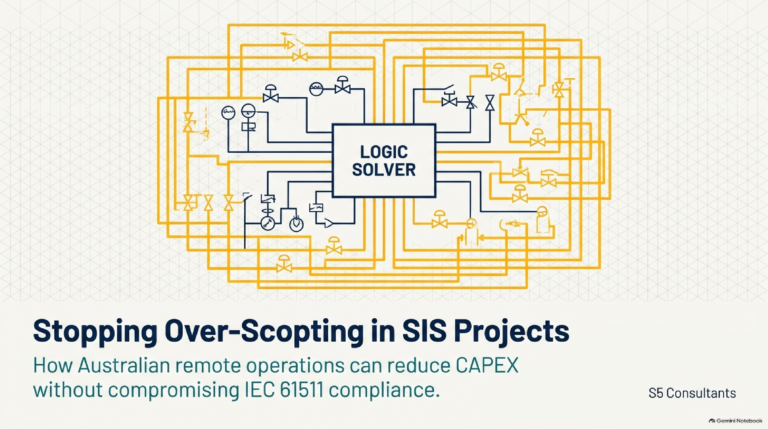
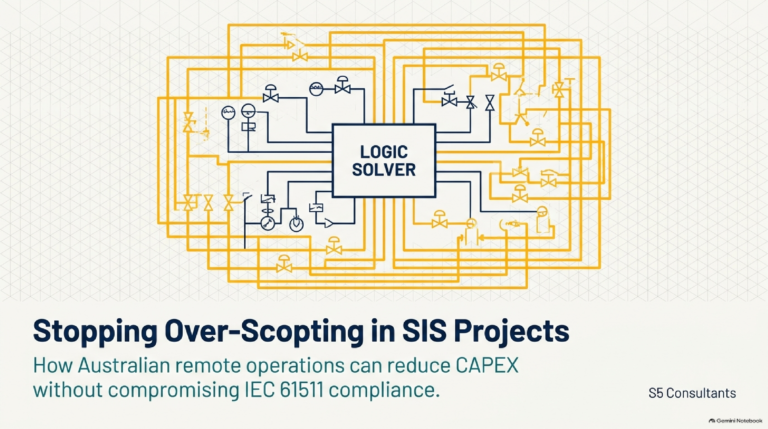
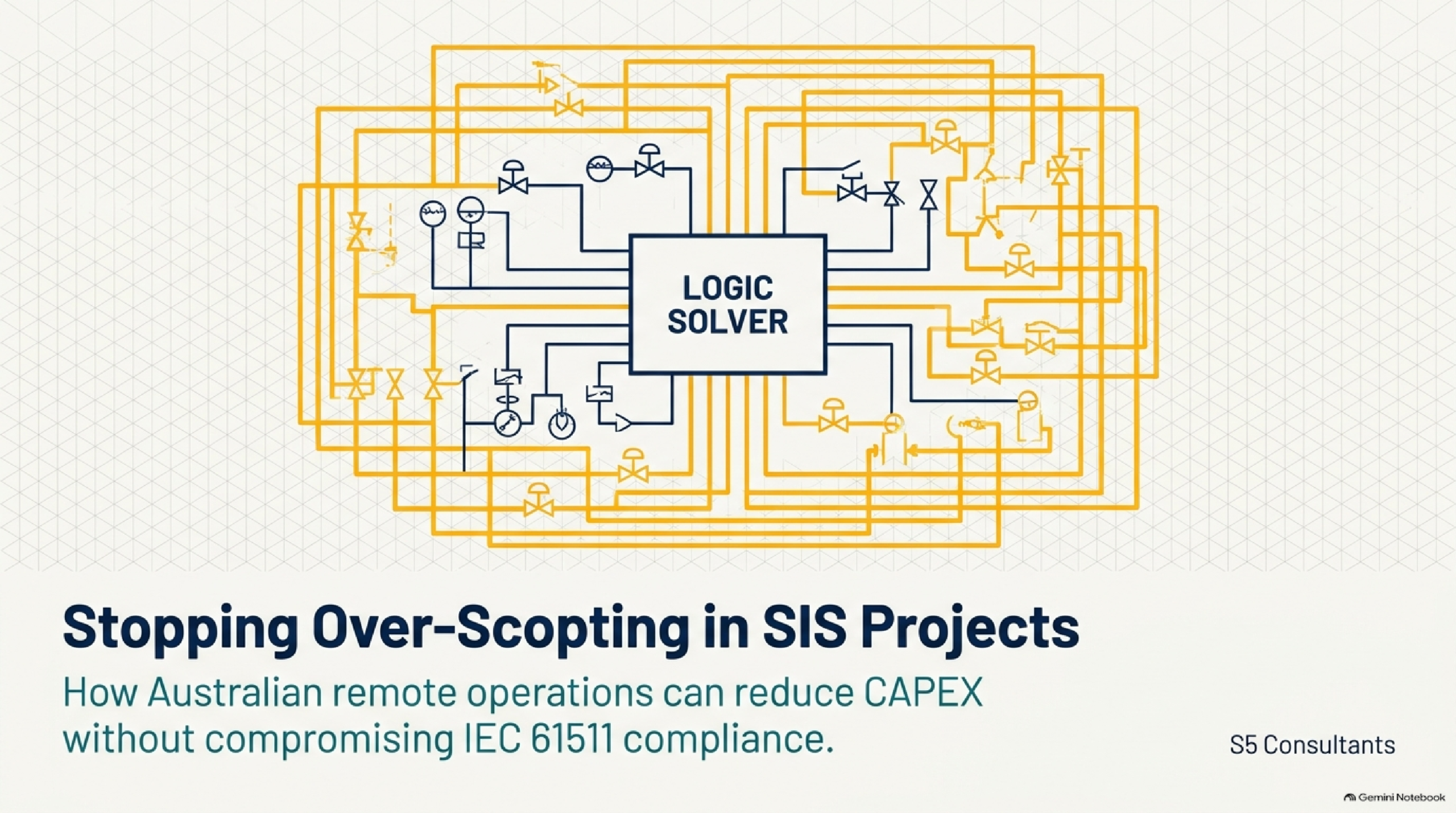
Industrial safety engineers are currently trapped between regulatory panic and squeezed budgets, often forced into over-scoped safety systems that lean heavily into expensive gold-plating.
What the problem really costs
Instead of focusing resources on genuine plant hazards, teams waste thousands of hours wrestling with cumbersome proof-testing regimes and deafening alarm floods that routinely mask actual operational threats.
Ignoring this compliance-driven over-engineering silently bleeds capital, diverting critical funds away from production while paradoxically increasing operational risk through unnecessary system complexity.
Off-the-shelf templates and internal do-it-yourself approaches usually fail because they rely on conservative worst-case assumptions rather than site-specific reality, locking plants into bloated architectures that are a nightmare to maintain.
Where the industrial safety approach differs
S5 cuts through this excess by applying rigorous risk analysis to right-size your safety compliance, ensuring absolute protection for your people and throughput without the financial fat.
What changes on site
By stripping out redundant layers, our targeted approach typically delivers up to a thirty percent reduction in unwarranted capital expenditure, slashes proof-testing downtime by half, and eliminates chronic alarm fatigue.
Where does your current safety system scope feel heavier than the actual risk on your floor?
Getting started
Industrial safety is not a technology decision, it is an operating decision. The sites that get value from it pick one or two assets that genuinely matter, instrument them properly, and wire the result into a maintenance routine somebody already owns. Start with the failure that costs the most per hour of downtime and work outward from there.
That sequence — one asset, one measurement, one owner — is what separates a programme that survives its first review from another pilot that quietly stops reporting. The engineering is rarely the hard part; sustaining the routine is.
If you are weighing options, bring the failure mode and the cost of an hour of downtime. Those two numbers are enough to scope a first deployment and to judge whether it earned its place at the next budget review.
Where this fits
Published by S5 Consultants. Related capability: S5 Consultants services, functional safety, OT cybersecurity.
Cross-published from the S5 Consultants LinkedIn stream (2026-10-11). Follow us on LinkedIn for the original post.
Talk to S5 Consultants
S5 Consultants is the assurance arm of S5 — functional safety, OT cybersecurity,
SCADA and systems engineering for industrial operators.
Discuss your project —
book a call.
Need a defensible functional-safety position?
Independent IEC 61511 consultancy — HAZOP, LOPA and SIL assessment, SIS design review and operational readiness. Led by a Certified Functional Safety Expert.
Fixed-scope engagement, clear deliverable, no obligation.