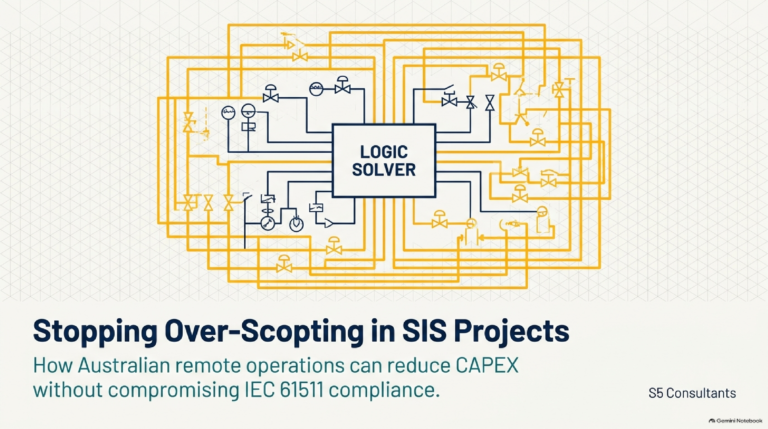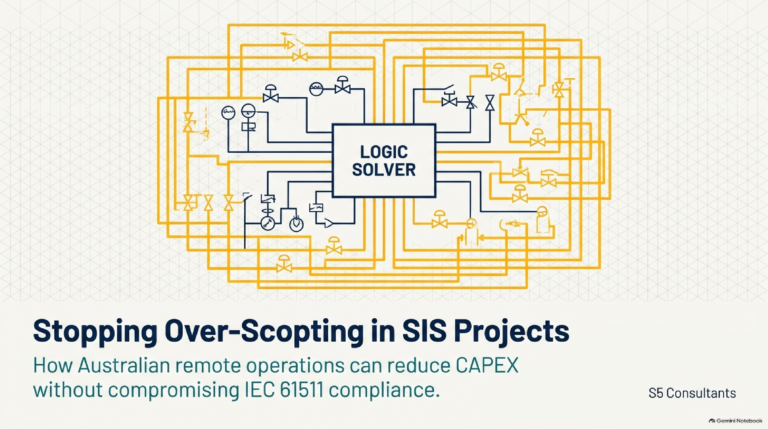
Are Your Safety and Control Systems Really Independent?
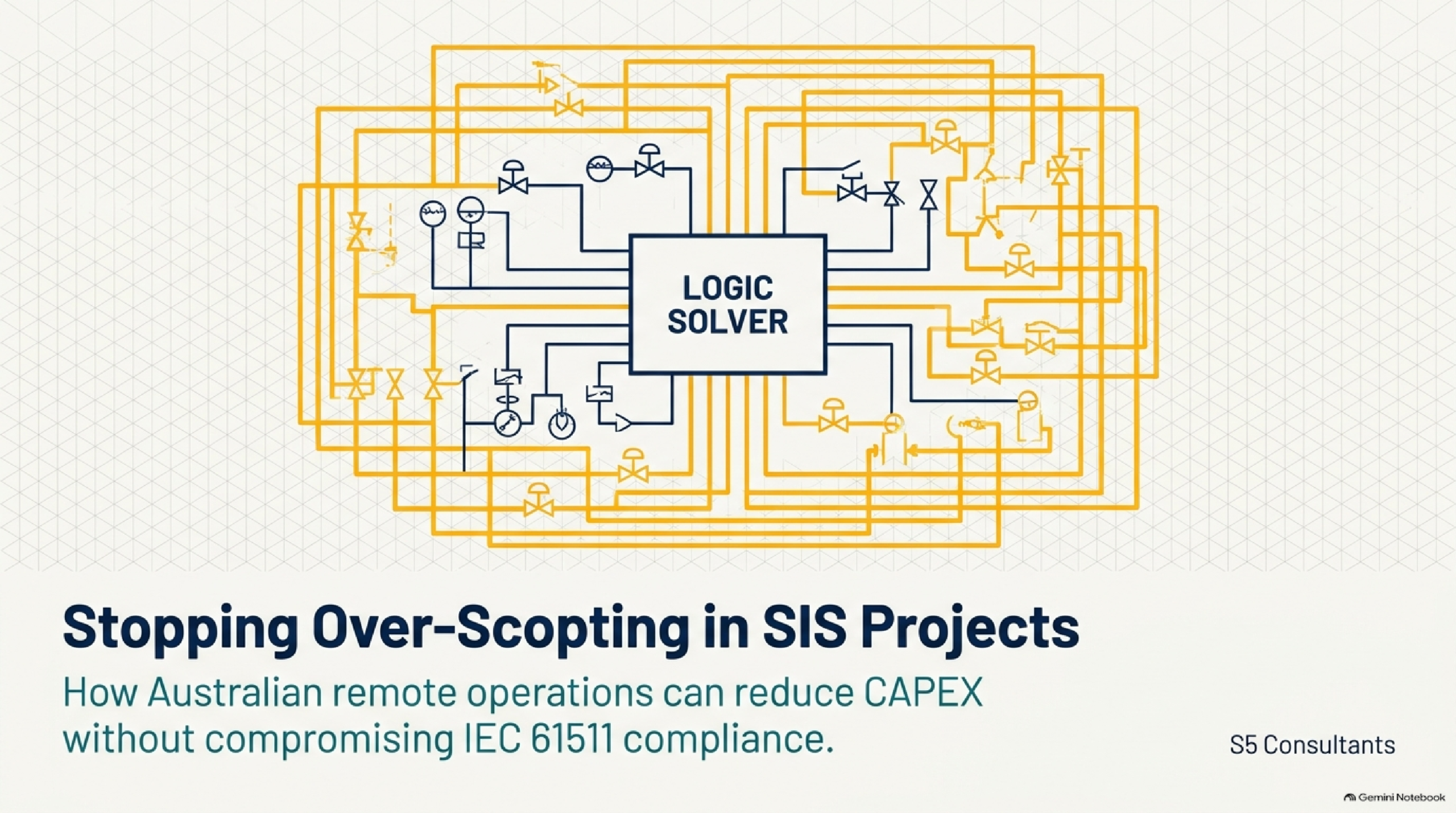
Sis independence is where engineering rigour has to meet the realities of a running plant. For many operations and engineering managers, the real BPCS and SIS independence question is not whether a single device has failed, but whether the separation between control and safety is genuinely understood, documented and controlled. Shared sensors, shared final elements, common maintenance activities, temporary bypasses and brownfield modifications can affect that separation. The opportunity is stronger lifecycle governance around where sharing is acceptable, how it is justified and how changes are controlled.
What the problem really costs
Better practice is not about adding layers by default. It is about reviewing the actual control and safety paths, testing the independence assumptions behind the design, and making clear decisions about shared devices with a documented basis. This gives maintenance, operations and projects a practical way to manage temporary bypasses, common work activities and modifications without over-engineering the solution.
With that clarity, decisions on where sharing is acceptable are easier to explain, interactions during maintenance or upgrades are better understood, and evidence for audits and management reviews is stronger. It also helps reduce rework and delayed upgrades caused by unresolved questions about separation.
Where the SIS independence approach differs
S5 supports this by reviewing the real architecture and operating context, testing independence assumptions, and translating the findings into practical segregation, testing and change controls. The focus is on the actual control and safety paths and the change history, rather than a generic checklist or template.
What changes on site
That makes the conversation more useful for engineering managers and project managers: what can stay shared, what needs separation, how the decision is justified, and how it will be controlled through the lifecycle.
Where in your plant do control and safety functions still share instruments, valves or maintenance activities, and how confident are you that this is documented and controlled?
Getting started
Sis independence is not a technology decision, it is an operating decision. The sites that get value from it pick one or two assets that genuinely matter, instrument them properly, and wire the result into a maintenance routine somebody already owns. Start with the failure that costs the most per hour of downtime and work outward from there.
That sequence — one asset, one measurement, one owner — is what separates a programme that survives its first review from another pilot that quietly stops reporting. The engineering is rarely the hard part; sustaining the routine is.
If you are weighing options, bring the failure mode and the cost of an hour of downtime. Those two numbers are enough to scope a first deployment and to judge whether it earned its place at the next budget review.
Where this fits
Published by S5 Consultants. Related capability: S5 Consultants services, functional safety, OT cybersecurity.
Cross-published from the S5 Consultants LinkedIn stream (2026-10-24). Follow us on LinkedIn for the original post.
Talk to S5 Consultants
S5 Consultants is the assurance arm of S5 — functional safety, OT cybersecurity,
SCADA and systems engineering for industrial operators.
Discuss your project —
book a call.
Need a defensible functional-safety position?
Independent IEC 61511 consultancy — HAZOP, LOPA and SIL assessment, SIS design review and operational readiness. Led by a Certified Functional Safety Expert.
Fixed-scope engagement, clear deliverable, no obligation.